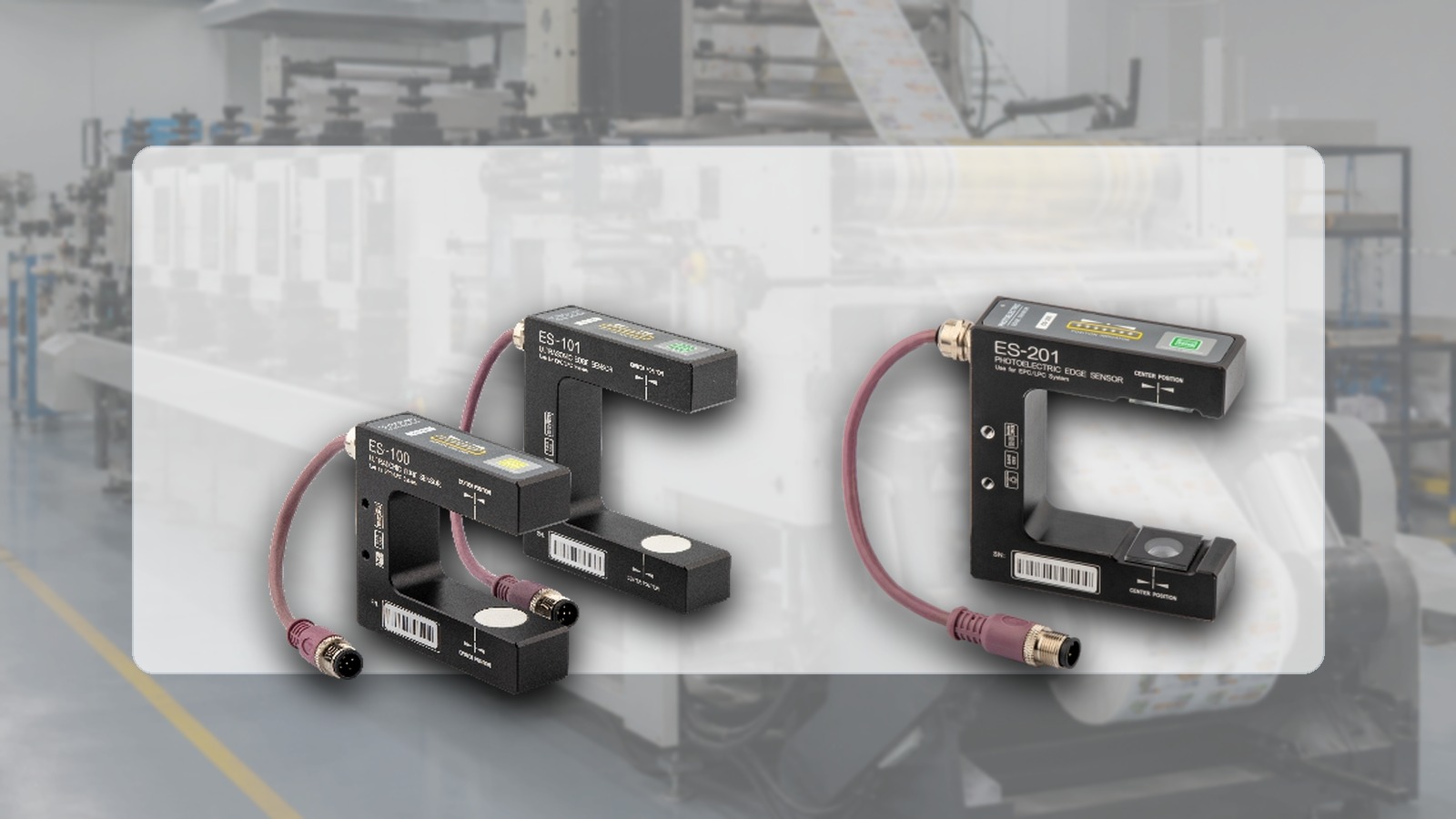
In any Web Guiding System, the edge sensor is the starting point of the entire control loop. Before the controller can correct web position, it must first receive a reliable position signal. If the sensor cannot detect the web edge consistently, the controller has nothing accurate to act on, regardless of how capable the control electronics are.
Choosing between an ultrasonic edge sensor and an infrared edge sensor is one of the most practical decisions in web guiding system configuration. The correct choice depends on material type, transparency, surface condition, edge geometry and the operating environment of the machine section.
This article explains how each sensor type works, where each performs reliably, and how to approach selection for common converting, printing, slitting and rewinding applications.
Why Edge Sensor Selection Matters
An edge sensor that is mismatched to the material or application will produce unreliable detection results. Common symptoms include guiding drift, unstable correction, false triggering, oscillation around the target position and the need for frequent manual adjustment.
In production environments, these problems can lead to material waste, machine downtime, unstable web tracking and reduced line efficiency.
The choice of web guide sensor is not a minor accessory decision. It is a functional specification that determines whether the guiding system can detect the web edge reliably under real production conditions.
How Ultrasonic Edge Sensors Work
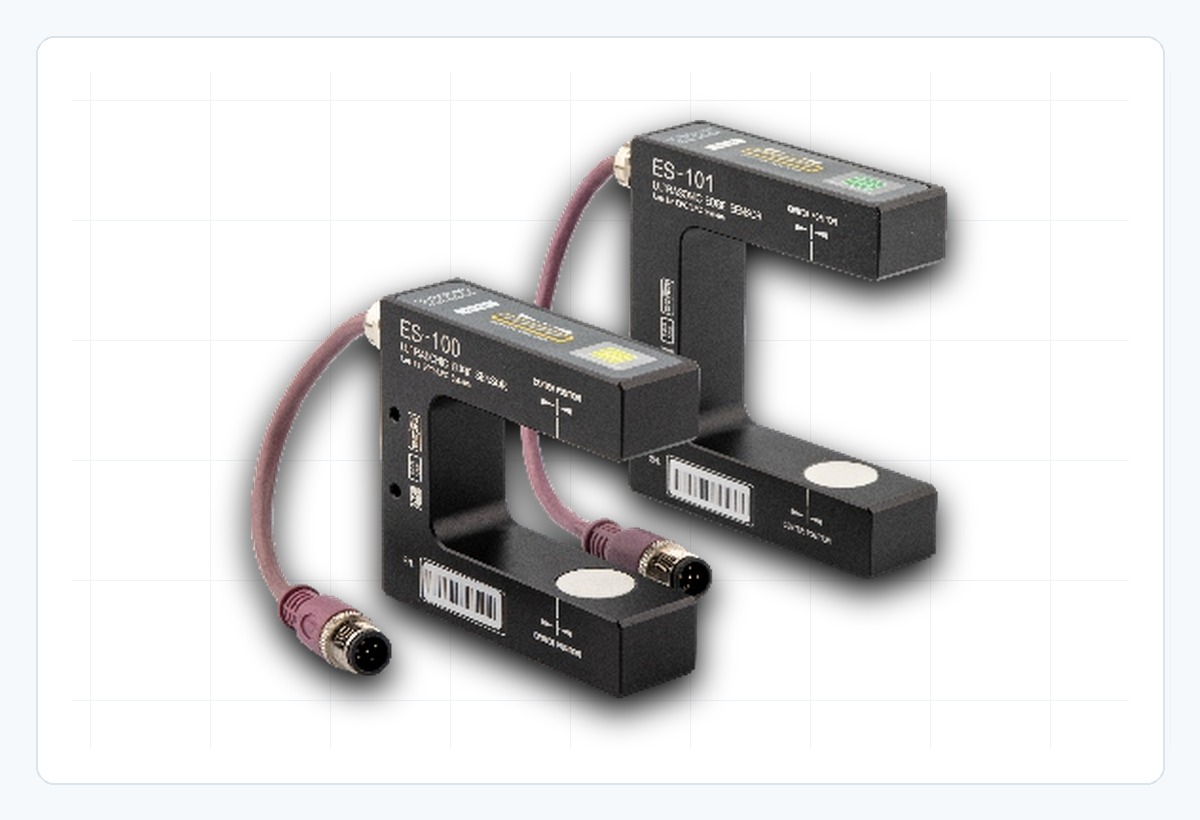
Ultrasonic edge sensors detect the web edge by using sound waves. The sensor emits an ultrasonic signal and detects changes as the web edge passes through the sensing area. Because the detection principle is acoustic rather than optical, ultrasonic sensors are less affected by material color, surface finish or optical transparency.
This makes ultrasonic sensors suitable for applications where light-based detection may be unreliable, such as:
- Transparent films, including clear PET, BOPP and CPP
- Translucent or semi-transparent materials
- Low-contrast materials where the web and background look similar
- Certain label and film materials where optical contrast is limited
- Applications where reflection, coating or surface finish may affect optical sensing
KENDORIC offers the EDS-02 Ultrasonic Sensor and the ES100 Ultrasonic Sensor for web guiding applications requiring acoustic edge detection. Final sensor selection should still be confirmed with the actual web material, edge condition and installation position.
How Infrared Edge Sensors Work
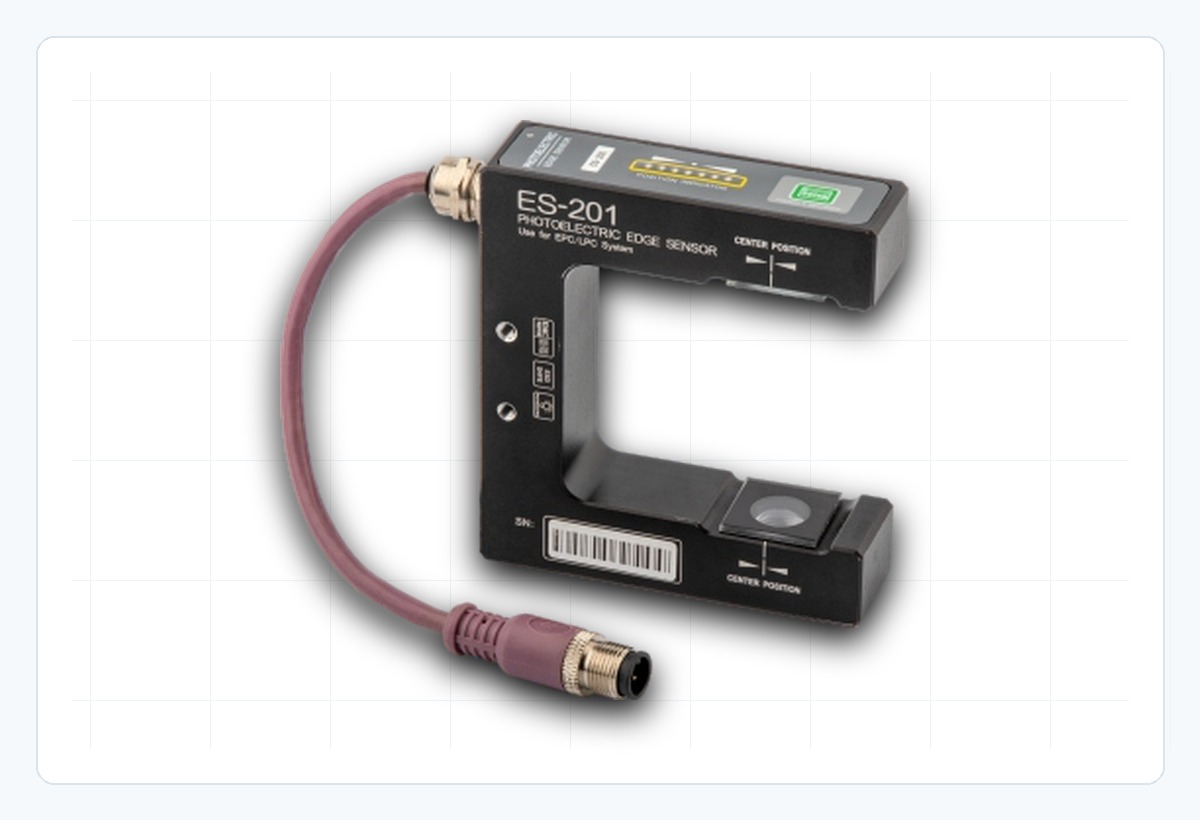
Infrared edge sensors use light-based detection. The sensor detects the web edge by measuring changes in infrared light as the material moves through or across the sensing area. Detection quality depends on the optical contrast between the web and the open gap, background or sensing zone.
Infrared sensors are often suitable when:
- The web material is opaque
- The material is paper, paperboard or label stock
- The material has a clear and stable edge
- The web is a non-transparent plastic film with sufficient optical contrast
- The machine section provides stable installation conditions for the sensor
KENDORIC offers the EDR-02 Infrared Sensor and the ES201 Infrared Sensor for web guiding applications where optical edge detection is appropriate. Final sensor selection should still be confirmed with the actual web material, edge condition and installation position.
Ultrasonic vs Infrared Edge Sensors: Key Differences
| Selection Factor | Ultrasonic Edge Sensor | Infrared Edge Sensor |
|---|---|---|
| Detection method | Acoustic detection using sound waves | Optical detection using infrared light |
| Best material type | Transparent, translucent or low-contrast materials | Opaque materials with a clear optical edge |
| Transparent material | Commonly suitable | May be unreliable unless contrast or special conditions are available |
| Opaque material | Can be used | Commonly suitable when optical contrast is adequate |
| Edge contrast requirement | Less dependent on optical contrast | Requires sufficient contrast between web and background |
| Typical applications | Clear film, packaging film, translucent label material | Paper, opaque label stock, cardboard, opaque plastic web |
| Selection caution | Sensor gap, material stiffness and installation position should be checked | Reflection, dark background, coating or poor edge quality may affect detection |
Which Sensor Should You Choose?
The starting point for sensor selection is the material itself. A few practical rules can help narrow the choice.
Use an ultrasonic edge sensor when the material is transparent or low contrast
If the web is transparent, translucent or difficult to separate visually from the background, ultrasonic detection is often the safer choice. This is common in clear film and certain flexible packaging applications.
Ultrasonic detection is also useful when material color changes frequently, because it does not rely on optical contrast.
Use an infrared edge sensor when the web is opaque and has a clear edge
If the web is paper, label stock, opaque film or another material with a stable optical edge, an infrared sensor can be a practical and cost-effective choice.
Infrared sensors are commonly used in label printing, die-cutting and general converting applications where the web edge is visually clear and stable.
Test with the actual material when conditions are uncertain
Some materials do not fit neatly into one category. Metallized film, coated materials, reflective surfaces, dark materials, perforated edges or irregular slit edges may require practical testing.
In these cases, material samples, machine photos or short videos of the web path can help confirm the sensor type before final selection.
Consider installation geometry
Sensor choice is not only about material. Installation space, sensor mounting position, web path angle, machine vibration and available adjustment range also affect performance.
A good sensor choice should match both the material and the mechanical layout of the machine.
Common Application Examples
Transparent film web guiding
Clear PET, BOPP and CPP films are common applications for ultrasonic edge sensors. The optical transparency of these materials can make infrared edge detection unreliable unless the application provides suitable contrast or special detection conditions, making ultrasonic detection a common choice for transparent film guiding.
Label stock and label printing lines
Label stock on a release liner is often opaque and has a defined physical edge. Infrared sensors are commonly selected in these applications. If the face stock or liner is translucent, the actual material should be checked before confirming the sensor type.
Digital printing machines
Digital printing machines may process paper, opaque film, clear film or specialty label materials. Sensor selection should be based on the actual material range. Machines that process multiple substrate types may require more flexible sensor configuration.
Slitting and rewinding lines
Slitting and rewinding machines process many types of incoming material, including paper, film, foil laminates and composite webs. Sensor selection should consider both the primary material and the quality of the slit edge.
Die-cutting machine entry sections
At the entry of a die-cutting section, stable web position is important for cutting alignment. Infrared sensors may be suitable for paper and opaque label stock, while ultrasonic sensors may be considered for transparent or low-contrast film-based materials.
What Information Should Buyers Provide?
When requesting a web guiding sensor recommendation, the following information helps make the selection more accurate:
- Material type, such as paper, film, foil, laminate or label stock
- Whether the material is transparent, translucent or opaque
- Web width range
- Line speed
- Machine section where the sensor will be installed
- Edge condition, such as clean slit, perforated, frayed, coated or irregular
- Available sensor installation space
- Photos or short video of the web path
- Current guiding problem, if replacing or upgrading an existing system
The more clearly the actual production condition is described, the easier it is to match the sensor to the application.
Need Help Selecting a Web Guiding Sensor?
Sensor selection for a web guiding system is straightforward in many applications, but some materials and machine layouts require closer review.
Contact KENDORIC to share your material type, web path, machine section and edge detection requirements. KENDORIC can help review the application and suggest a practical ultrasonic or infrared sensor configuration for your web guiding system.
Need help selecting a web guiding sensor?
Share your material type, transparency, web width, line speed, machine section and edge condition. KENDORIC can help review a practical ultrasonic or infrared sensor configuration for your web guiding system.
Request Selection Support