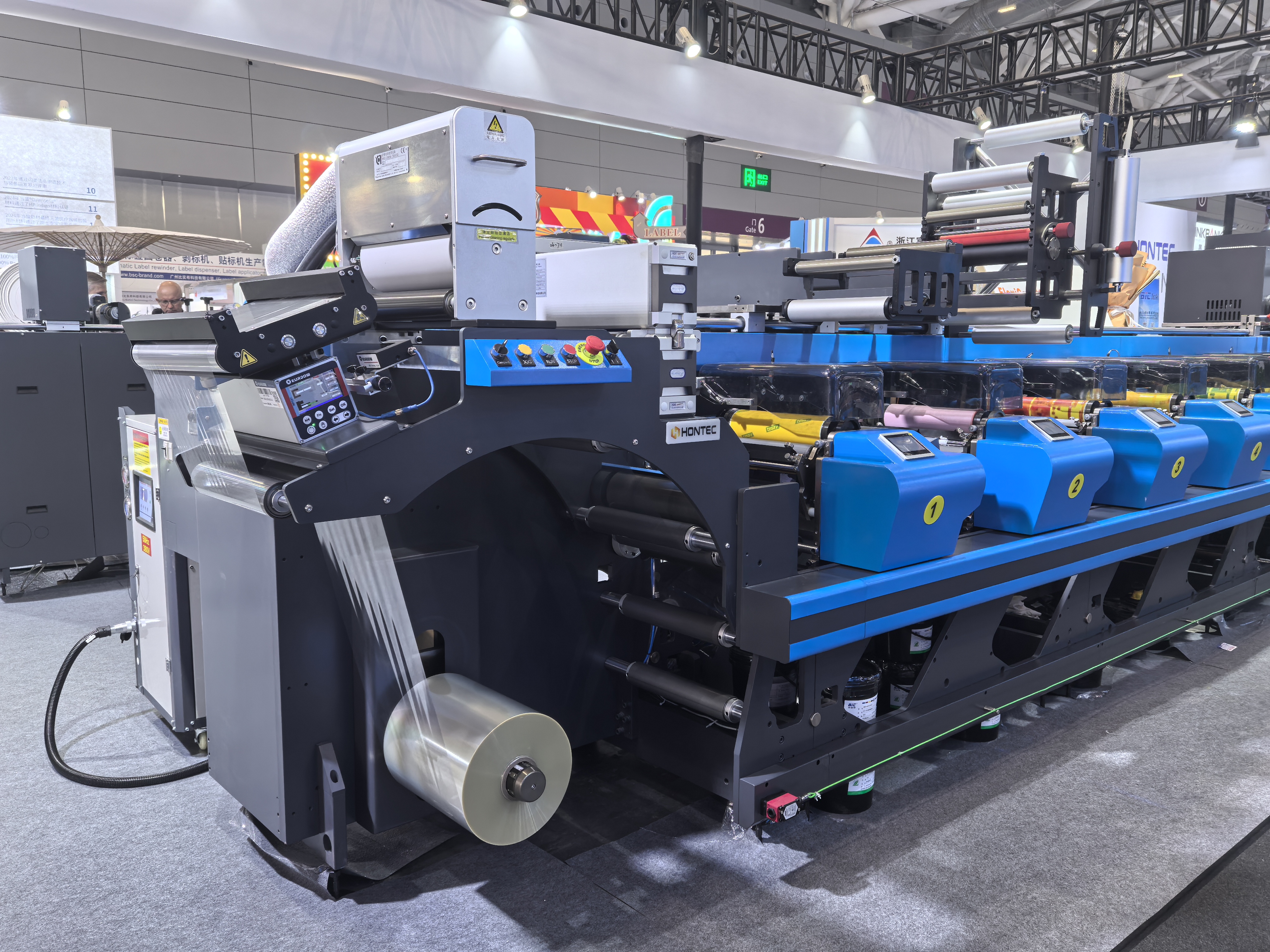
Precise web position control is one of the less-discussed but consistently critical factors in label printing, digital printing, and die-cutting production. When a web drifts, even by a few millimeters, the consequences can include unstable edge position, registration-related issues, die-cutting misalignment, increased material waste, and unplanned downtime. For machine builders and end users working with narrow web equipment, a reliable Web Guiding System is not a convenience feature; it is a functional requirement.
This article explains how integrated web guiding systems work, what they are suited for, and what buyers should consider when selecting one.
What Is an Integrated Web Guiding System?
An integrated web guiding system, sometimes called an all-in-one web guiding frame, combines the core components of a web guiding solution into a single, compact unit. Rather than sourcing and assembling a guiding frame, controller, sensor, and actuator separately, the integrated design packages these elements together for straightforward installation and consistent performance.
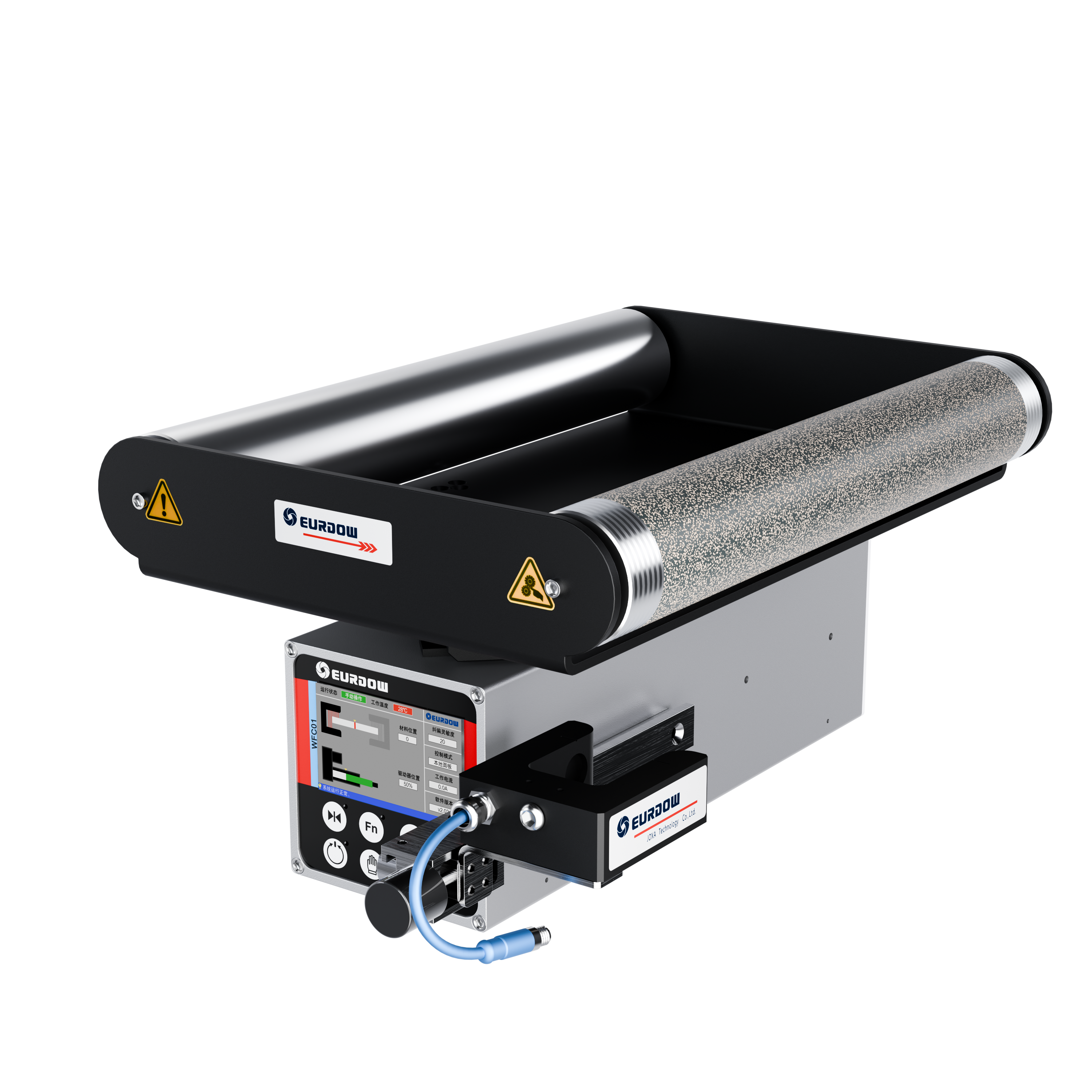
This type of system is particularly well suited to narrow web machines where installation space is limited, machine layouts are compact, and commissioning time needs to be kept short. It is also a practical choice for retrofit projects where adding a separate component system would require significant mechanical modification.
Why Label Printing Machines Need Web Guiding
In label printing and related narrow web processes, material position consistency directly affects output quality. Common problems that arise without effective web guiding include:
- Web edge deviation: The material shifts laterally during unwinding or processing, causing inconsistent edge position across the machine width.
- Registration-related issues: Web position instability can contribute to registration-related issues, especially when combined with tension variation, material stretch, or process alignment problems.
- Die-cutting misalignment: When the web drifts before entering the die-cutting section, cut positions shift relative to the printed image.
- Increased material waste: Off-register or miscut product is rejected, raising scrap rates and material cost.
- Unstable production: Operators must intervene more frequently to correct web position, reducing effective uptime.
Web guiding does not replace proper tension control or registration control, but it helps keep the web in a stable lateral position before key process sections.
These problems are particularly acute on machines running flexible film, thin paper, or specialty label stocks, where web tension and edge stability can vary with roll diameter, material splice, or environmental conditions.
Main Components of an Integrated Web Guiding System
A typical integrated web guiding system for narrow web machines consists of the following elements:

Integrated guiding frame
The mechanical structure that moves the web laterally to correct its position. In an all-in-one design, the frame is built to accept the other components directly, reducing the number of independent mounting operations during installation.
Web guiding controller
The control unit processes sensor feedback and drives the actuator to make position corrections. A controller such as the WFC01 Controller provides the signal processing and control logic required for closed-loop guiding. Controllers typically offer adjustment of response speed and correction range to suit different applications.
Edge sensor
The sensor detects the position of the web edge and sends a signal to the controller. Sensor selection depends on the material being processed. For transparent, translucent, or low-contrast materials, an ultrasonic sensor such as the EDS-02 Ultrasonic Sensor may be suitable, as it detects web presence through sound reflection rather than light. For opaque materials with a clear edge, an infrared edge sensor can also be considered. Matching the sensor type to the material is an important step in system selection.

Actuator
The actuator responds to controller output and physically moves the guiding frame to bring the web back to the target position. Actuator type and response speed are matched to the machine's line speed and required correction accuracy.
Installation and selection support
For both OEM builders and end users retrofitting existing equipment, installation positioning, whether at the unwind, before a print section, or before the die-cutter, affects system performance. Component selection also varies depending on web width, material type, and guiding accuracy requirements.
Suitable Applications
Integrated web guiding systems are used across a range of narrow web and converting applications:
- Label printing machines: flexographic, letterpress, or digital label presses where consistent edge position and stable web tracking are required.
- Digital printing machines: inkjet or toner-based digital label presses where consistent web position supports print head alignment and image quality.
- Die-cutting machines: flatbed or rotary die-cutters where web position before the die must be held within tight tolerances.
- Narrow web converting lines: laminating, coating, slitting, or inspection lines where stable web tracking reduces waste and improves output quality.
- Retrofit projects: existing machines being upgraded to add or improve guiding capability, where an integrated all-in-one system reduces the engineering work involved.
KENDORIC supplies integrated web guiding solutions for these applications, including EURDOW all-in-one guiding frame options that are widely used in China's label printing machine market.
Key Selection Factors
Selecting an appropriate integrated web guiding system requires reviewing several application-specific parameters:
| Factor | Why It Matters |
|---|---|
| Web width | Determines the guiding frame size and actuator travel range. |
| Material type | Affects sensor selection. Transparent or reflective materials may require ultrasonic sensing. |
| Line speed | Influences controller response speed and actuator type. |
| Machine section | Unwind, infeed, print section, or die-cutter entry each have different guiding requirements. |
| Installation space | Compact machines may limit the available frame depth or mounting orientation. |
| Required guiding accuracy | Tighter tolerances require more precise sensors and actuators. |
| Edge condition | Clean, consistent edges are easier to guide than torn, coated, or perforated edges. |
| New build or retrofit | Retrofit installations may need custom brackets or sensor repositioning. |
These factors should be reviewed before specifying a system to avoid mismatches between the guiding system and the machine's operating conditions.
Integrated Web Guiding vs Separate Component Guiding
There are two general approaches to building a web guiding solution: integrated systems and separate component assemblies.
Integrated systems bring the guiding frame, controller, sensor, and actuator together in a pre-matched package. This approach simplifies sourcing, reduces installation complexity, and is generally the faster path to a working installation. For many narrow web label printing and digital printing machines, integrated systems provide a practical balance of performance, installation simplicity, and cost.
Separate component systems offer more flexibility in layout and allow each component to be specified independently. This approach is more common on wider web machines, custom-built lines, or applications where machine geometry requires the controller, sensor, and frame to be positioned independently. Separate component selection also allows for more specific actuator or sensor choices in demanding applications.
For most standard label printing machines and similar narrow web equipment, integrated systems are a straightforward and widely used approach worth evaluating first.
What Information Should Buyers Provide?
To receive a suitable web guiding recommendation, buyers or machine builders should be prepared to share the following:
- Material type (paper label stock, PE film, PET film, foil laminate, etc.)
- Web width (minimum and maximum if variable)
- Line speed (operating range)
- Machine section where guiding is needed (unwind, pre-print, pre-die-cut, etc.)
- Description of the guiding problem being experienced or anticipated
- Machine photos or layout drawings showing the available installation area
- Available installation space: frame depth, mounting orientation, and nearby obstructions
This information allows a guiding system to be matched to the specific machine and application rather than selected from a general catalog.
Need help selecting an integrated web guiding system?
If you are evaluating a web guiding system for a label printing machine, digital press, die-cutter, or narrow web converting line, or considering a retrofit on existing equipment, KENDORIC can assist with the review process.
Share your material type, web width, line speed, machine section and installation requirements. KENDORIC can help review a practical web guiding configuration.
Request Selection Support