
How to Choose CNC Machining Materials for Your Project (Complete Guide)
Learn how to choose CNC machining materials for your project. Compare aluminum, stainless steel, and plastics to find the best option for custom CNC parts..
Introduction
Choosing the right CNC machining materials is critical for the success of your project. The material affects not only the strength and durability of your parts, but also the machining cost, lead time, and overall performance.
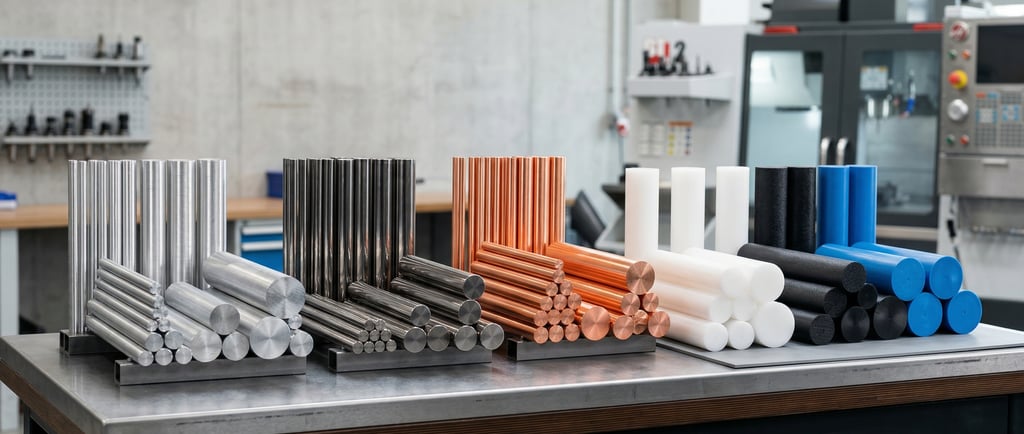
In this guide, you will learn how to choose the best materials for CNC machining, including aluminum, stainless steel, copper, and engineering plastics.
What Are CNC Machining Materials?
CNC machining materials refer to the metals and plastics used to manufacture custom parts through CNC milling, turning, or other machining processes.
The most commonly used CNC machining materials include:
Aluminum
Stainless steel
Copper
Engineering plastics (POM, Nylon, ABS)
Each material has its own advantages depending on your application.
Common CNC Machining Materials Explained
Aluminum for CNC Machining
Aluminum is one of the most widely used CNC machining materials due to its excellent machinability and lightweight properties.
Key benefits:
Lightweight and strong
Corrosion-resistant
Easy to machine and cost-effective
Typical applications:
Electronic housings
Automotive components
Industrial parts
Stainless Steel for CNC Machining
Stainless steel is ideal for applications that require high strength and durability.
Key benefits:
High mechanical strength
Excellent corrosion resistance
Long service life
Typical applications:
Mechanical components
Medical equipment
Structural parts
Copper for CNC Machining
Copper is commonly used in applications requiring high conductivity.
Key benefits:
Excellent electrical conductivity
Good thermal performance
Typical applications:
Electrical components
Heat exchangers
Plastic CNC Machining Materials
Engineering plastics such as POM (Delrin), Nylon, and ABS are widely used in CNC machining.
Key benefits:
Lightweight and low cost
Good wear resistance
Easy to machine
Typical applications:
Precision parts
Insulating components
Low-friction parts
CNC Machining Materials for Custom Parts
Most CNC machining projects are based on customer drawings or samples. Choosing the right material early in the design stage can reduce production costs and improve efficiency.
Working with an experienced CNC machining supplier can help you select the most suitable material for your application.
Conclusion
Choosing the right CNC machining materials is essential for achieving the best balance between performance, cost, and manufacturability.
Aluminum, stainless steel, copper, and engineering plastics all offer unique advantages. The best choice depends on your specific application and requirements.
If you are looking for a reliable CNC machining supplier, feel free to contact us. We provide professional advice and fast quotations based on your drawings.